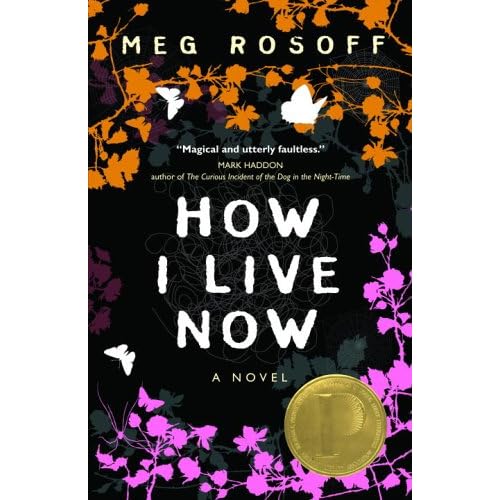
By Meg Rosoff.
Published in 2004 by Wendy Lamb Books, New York.
There was a moment, towards the end of reading How I Live Now, that I had the thought that it was among the best books I had ever read. Only it wasn't so much a thought as it was a sort of floating feeling, because I couldn't bear to remove myself from the narrative enough to have something so separate as a thought. Reading this book is like reading a dream.
Daisy, a 15 year old New Yorker, is sent to live with her Aunt and cousins in the English countryside. With the country on the brink of war her Aunt leaves to help with peace talks in Oslo, and the children are left behind to a seemingly idyllic existence of no school and no rules. This can't last. I moved slowly with Daisy from love and light and summer and freedom into war and loss and grief and survival. Daisy's voice is so clear and true that I felt the weird sense of normalcy that is maintained in the heart of chaos - despite the horrors Daisy faces, she keeps living. In her words, "We couldn't go on. We went on" (155). The style of the novel is abstracted, grammatical conventions have been left behind, but the resulting sense of flow is hypnotic. "Magical and utterly faultless," proclaims Mark Haddon (author of The Curious Incident of the Dog in the Night-Time - a book similar in its stylistic explorations) from the novel's cover. I concur.
10/10.
Ages 12-1000.